
January 27, 2026
Spring is an important time of year for any thatched property. After months of wind, rain, frost and occasional snow, your roof has worked hard to protect your home. As the weather improves and daylight hours increase, spring offers the ideal opportunity to carry out a thorough inspection and address any small issues before they develop into larger problems.
At J. Challis Master Thatcher, we always recommend regular seasonal checks as part of responsible thatch care. A well-maintained roof not only lasts longer but also retains its appearance and performance for many years. Below, we outline the key areas to look at when inspecting your thatched roof this spring.
Start with a General Visual Check
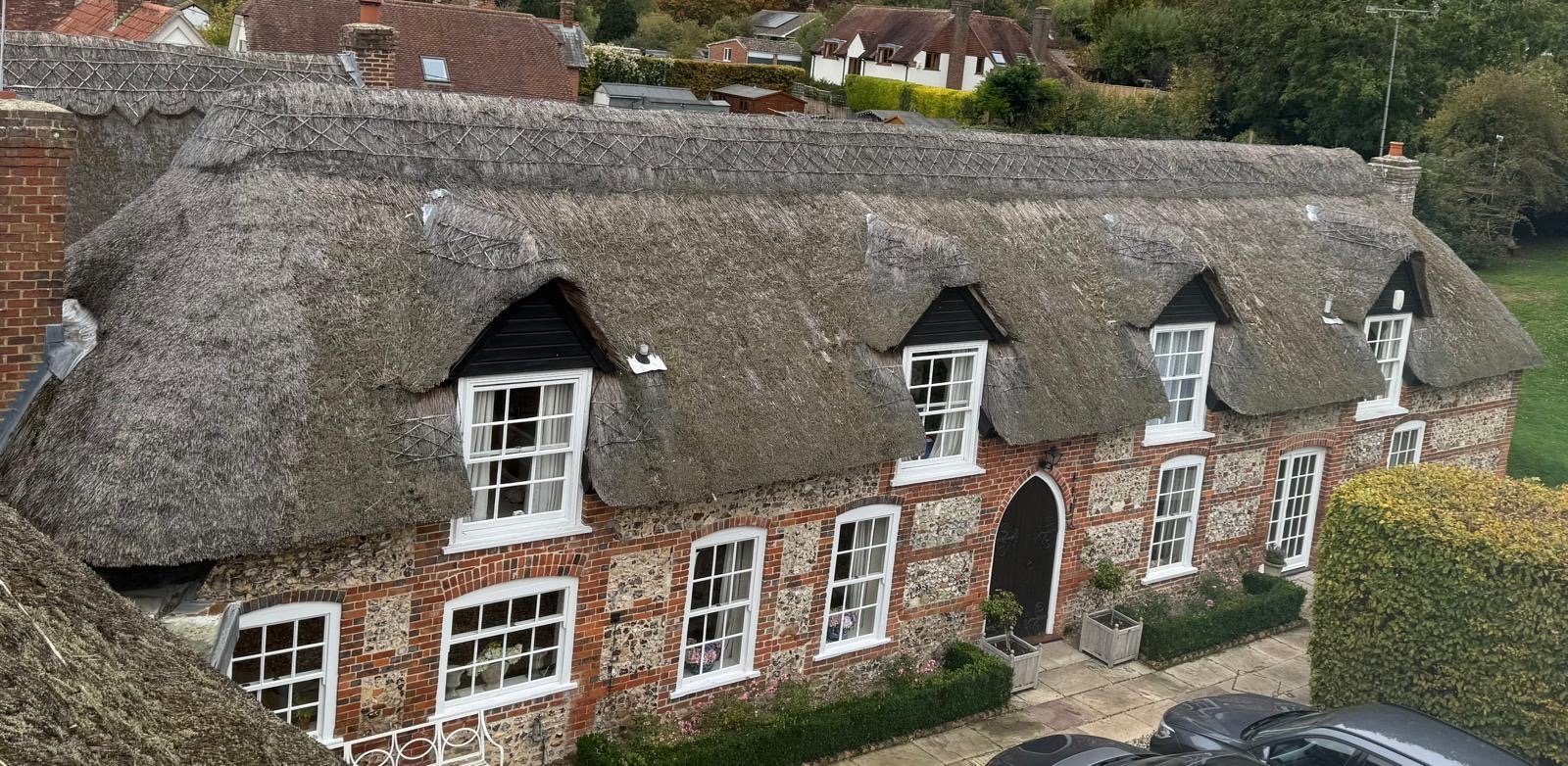
Before looking closely at individual areas of the roof, it is always worth beginning with a general visual inspection from ground level, as this often highlights changes that may not be obvious when focusing on smaller details.
- Does the roof still look even and well-shaped?
- Are there any noticeable dips or sagging areas?
- Does the thatch appear compact, or are there loose or fluffy sections?
Examine the Ridge Carefully
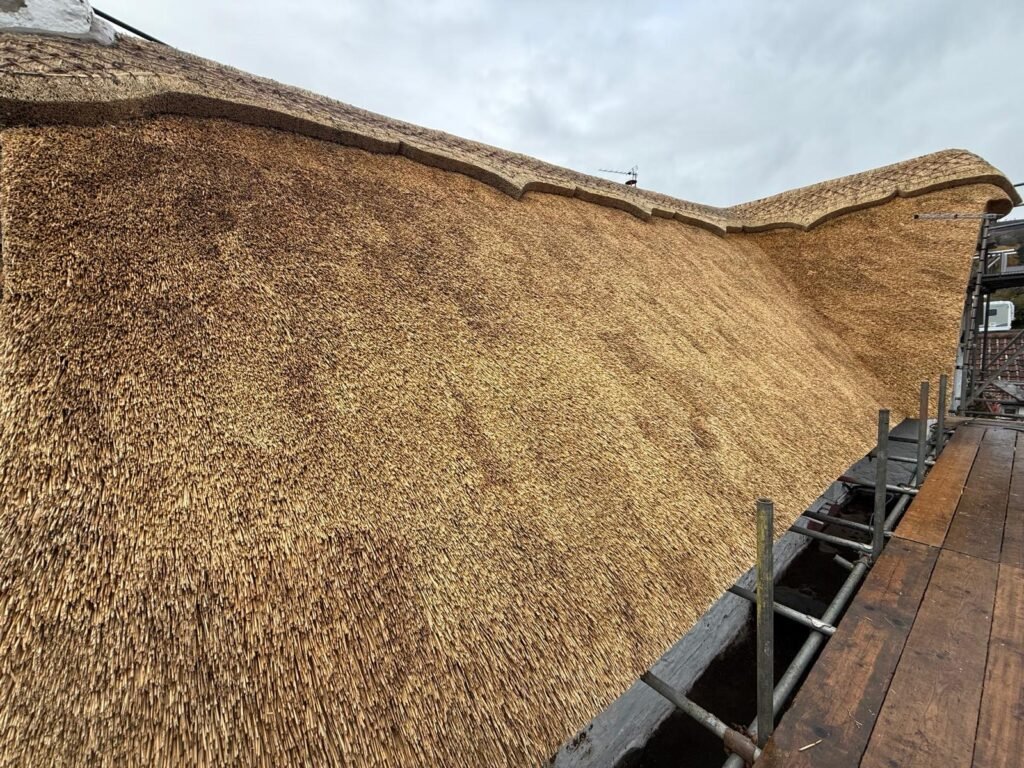
As the most exposed part of a thatched roof, the ridge is usually the first area to show signs of weathering, making it an essential focus during any spring inspection.
- Thinning material or a loss of definition in the ridge pattern.
- Loose or lifted sections, especially after winter storms.
- Cracking or splitting along the ridge surface.
Watch for Moss, Algae and Lichen Growth
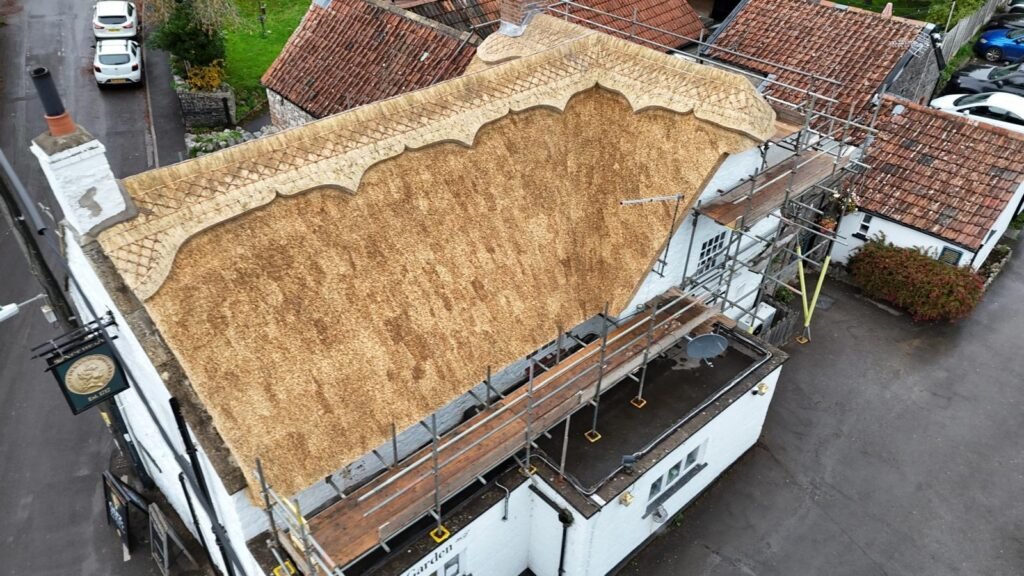
Following the damp and often shaded conditions of winter, moss, algae and lichen can begin to establish themselves on the surface of the thatch, particularly on north-facing slopes.
- Hold moisture in the thatch.
- Slow drying after rainfall.
- Encourage decay of the straw or reed beneath.
Check Valleys, Hips and Junctions
Areas where roof slopes meet or where features interrupt the thatch are naturally more vulnerable, as they experience greater water flow and are often slower to dry.
- Valleys, where two roof slopes meet.
- Hips and edges, which are exposed to wind-driven rain.
- Areas around chimneys, dormer windows and roof lights.
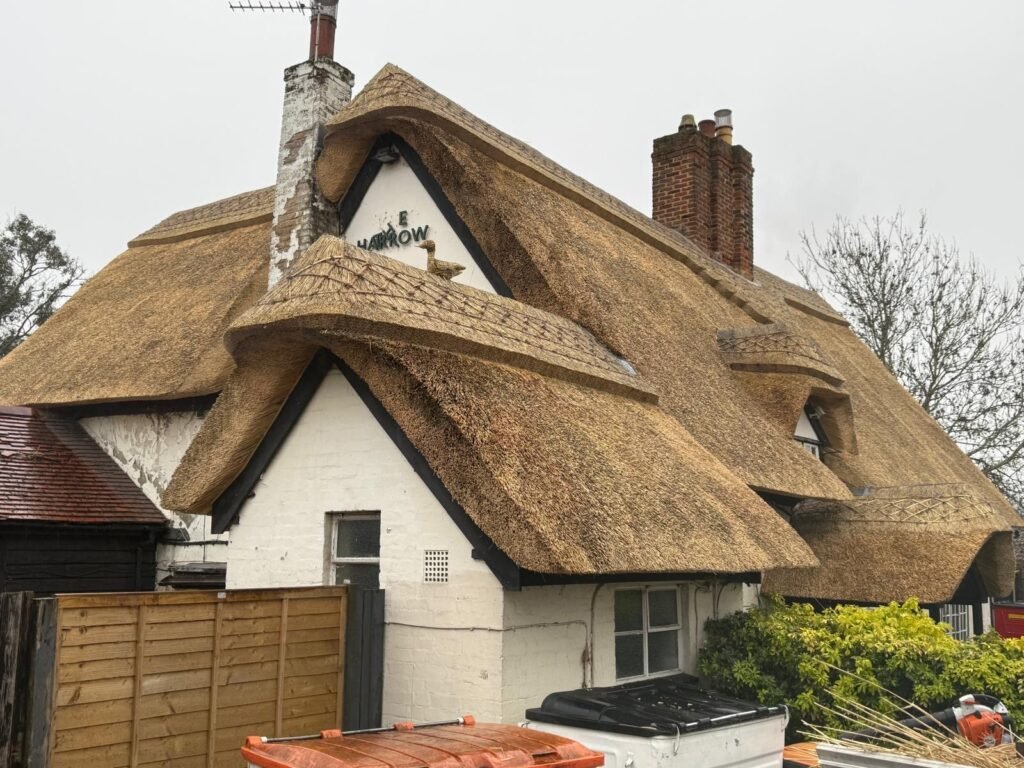
Look for Signs of Wildlife Activity
As a natural roofing material, thatch can occasionally attract birds and small animals, particularly in early spring as nesting activity increases.
- Small holes or disturbed patches in the thatch.
- Nesting material near ridges or eaves.
- Increased bird activity in one specific area.
Don’t Forget to Check Inside
If it is safe and accessible, a brief inspection inside the loft space can provide valuable insight into the condition of the roof and reveal early issues not yet visible from outside.
- Daylight showing through the roof.
- Damp patches on timbers after rain.
- Loose debris falling from the underside of the thatch.
Why Spring Inspections Are So Important
Spring inspections are particularly valuable because they allow any damage caused by winter weather to be identified early, while conditions are improving and repair work can be planned more easily.
- Damage from winter weather becomes clearer as the roof dries out.
- Repairs can be planned before summer growth and nesting seasons.
- Small maintenance jobs can prevent more extensive work later on.
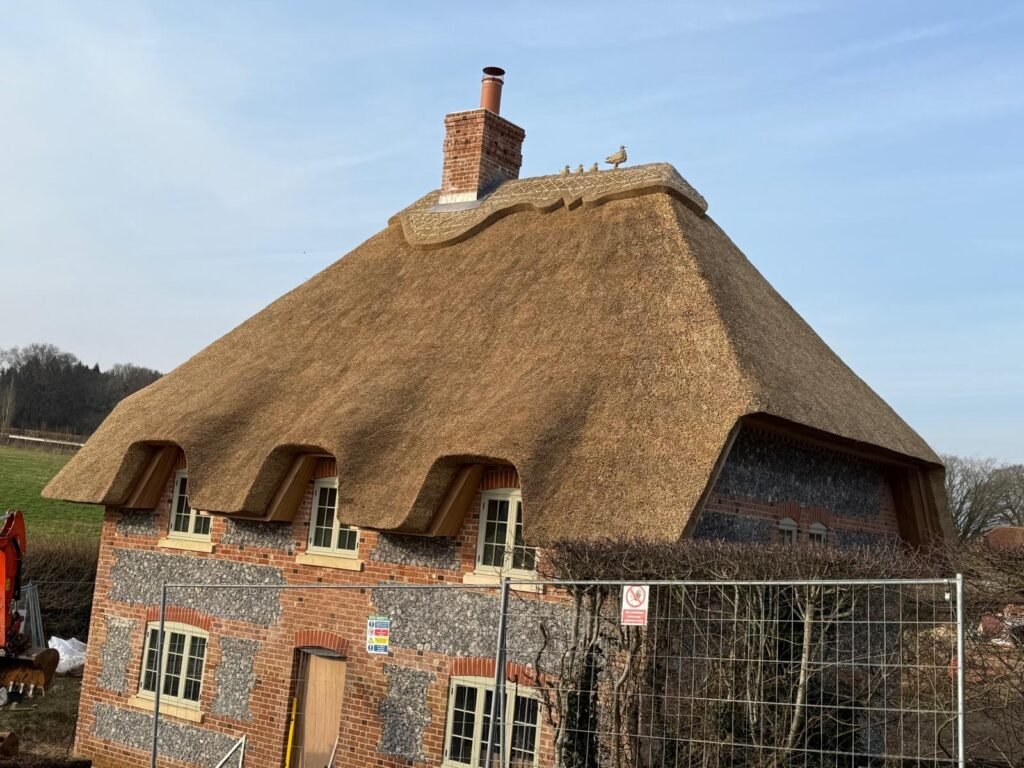
When to Call in a Master Thatcher
If any changes are noticed or there is uncertainty about the roof’s condition, seeking advice from a master thatcher ensures problems are assessed accurately and addressed appropriately.
- Carry out a full condition assessment.
- Advise on maintenance, patching or re-ridging.
- Help plan future work to keep your roof in the best possible condition.
FAQs
How often should a thatched roof be inspected?
A thatched roof should ideally be inspected at least once a year, with spring being one of the best times. Additional checks after severe weather are also recommended.
Is moss on a thatched roof always a problem?
Not necessarily. Light moss growth is common, but heavy build-up can trap moisture and slow drying. If moss is spreading or thick, it’s best to seek professional advice.
How long should a thatched roof ridge last?
A ridge typically lasts between 8 and 15 years, depending on materials, exposure and workmanship. The main coatwork usually lasts much longer.
Can I inspect my thatched roof myself?
You can carry out a basic visual check from ground level or inside the loft, but climbing onto a thatched roof is not recommended. A professional thatcher can safely carry out a thorough inspection.
What are the early signs that my thatched roof needs attention?
Early signs include thinning areas, loose or uneven straw, increased moss growth, leaks, or changes in the roof’s overall shape.